Notes (Page 2)

14 notes

Note

Ranking a small utility without SEO or backlinks
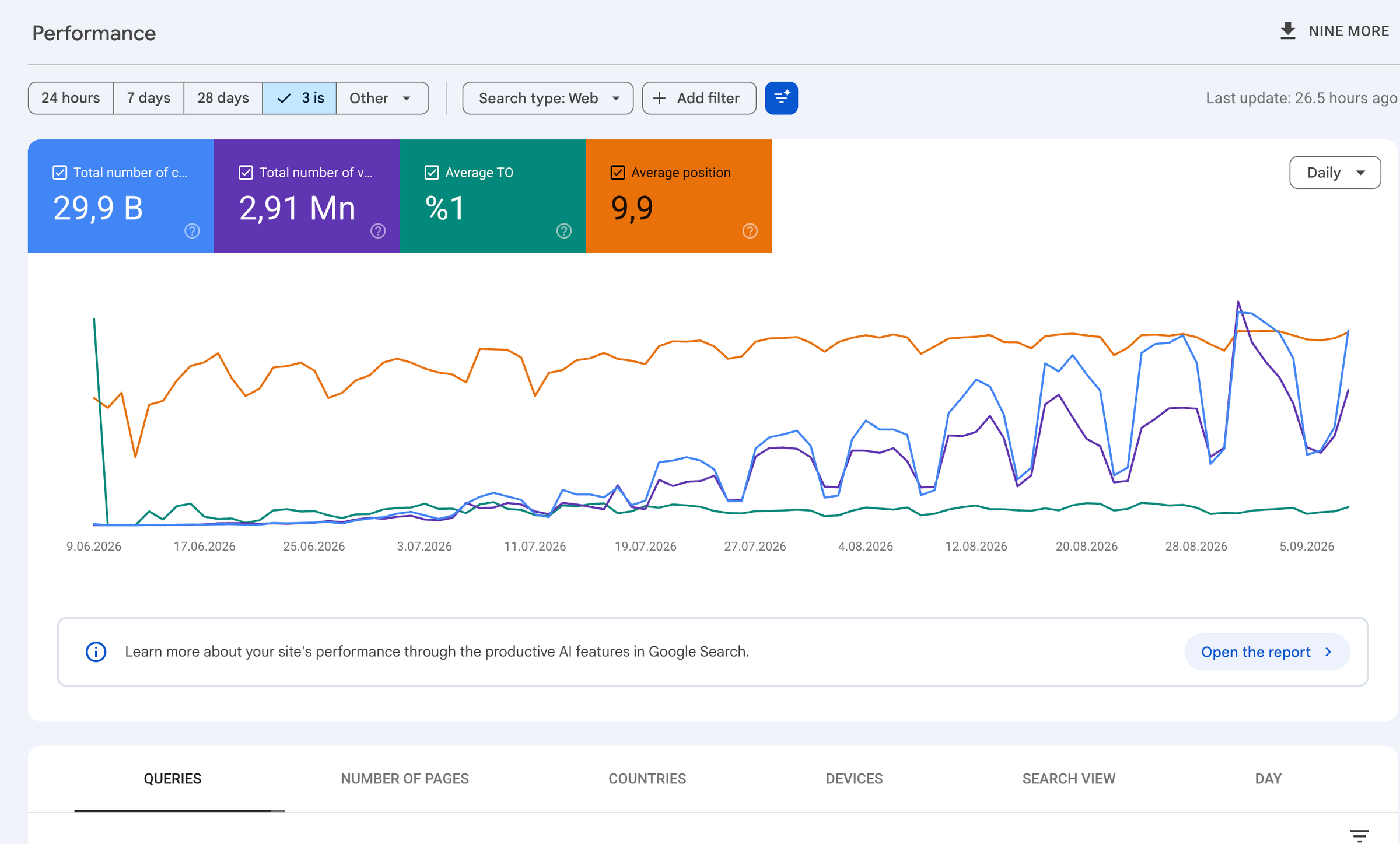
Google Search Console performance report showing 29.9K clicks and 2.91M impressions over three months

Three months ago, we launched a small search utility project. It was just a single-purpose tool, a minimal search form, and a handful of basic pages. We did no backlink outreach and no deliberate SEO work.

At first, I didn’t even submit the site to Google Search Console; it was only registered in Bing Webmaster Tools. Once I noticed it was naturally picking up rankings and clicks on Bing, I finally added it to Search Console.

From there, impressions and clicks kept compounding. Within three months, the tool climbed into the top five positions for several of its core queries, reaching roughly 30,000 clicks and nearly three million impressions.

It was a good reminder that you do not always need complex technical setups or aggressive SEO tactics. When a simple tool cleanly satisfies a specific search intent, search engines can pick it up and rank it on utility alone.

Note

Letting my wiki spot notes worth sharing

I added a small flow to my LLM wiki to spot things worth sharing while I work or bring in new information.

Hooks capture the conversation; the agent keeps possible notes in a private list with their sources. I choose what gets published, and a publishing skill prepares a short Trace note.

The mechanics passed local checks. I still need to see how useful the suggestions are in everyday work.

Note

Muse gives a personal AI agent its own computer

Meta’s Muse launch caught my attention. It looks promising: a personal AI agent you can message through its own app or WhatsApp, with a dedicated computer where it can keep working on your tasks.

That computer is a persistent, isolated Linux environment with a browser. Meta says Muse can work across connected apps, fill out forms, and continue after you close the app. You give it a task or a longer-term goal, and it comes back with progress, suggestions, or a request for approval.

The controls are part of the product. You choose which apps it can access, review its activity, and approve sensitive actions such as sending an email or making a purchase. Meta says passwords are stored separately from the main agent, which can use them without seeing them.

I haven’t tried it yet. What interests me is the combination: a familiar messaging interface, a computer that stays available, and a way to check what the agent is doing on your behalf.

Note

Why I made Trace

I take notes while working on projects. I try something, sometimes drop it, and sometimes a detail that seemed unimportant changes my decision. These notes stay in my private wiki.

Some of them are worth sharing. But turning a note into a separate piece of writing takes extra work. I made Trace to reduce that work.

Here, I’ll share small pieces from what I do: the reason behind a decision, an observation from an experiment, a detail I noticed later. Each one doesn’t need to be a long article. It just needs to make sense on its own.

My source notes are in Turkish. An agent will help me prepare the pieces I select in English and publish them, without adding conclusions I didn’t make or turning uncertainty into certainty.

That’s what I want from Trace: to share the worthwhile parts of things I’m already thinking about, with less effort.

Each note has a permanent link.

Back to top

Search notes

↑ ↓ to move · Enter to open · Esc to close