Check the Timeline Before Blaming the Algorithm
When search traffic or AI overview visibility collapses overnight, webmasters almost universally look at the public search news calendar. It feels reassuring to find a neat external narrative. A major spam update or core update rolls out, and we tell ourselves our site was simply caught in the algorithmic crossfire.
We almost fell into that exact trap this month.
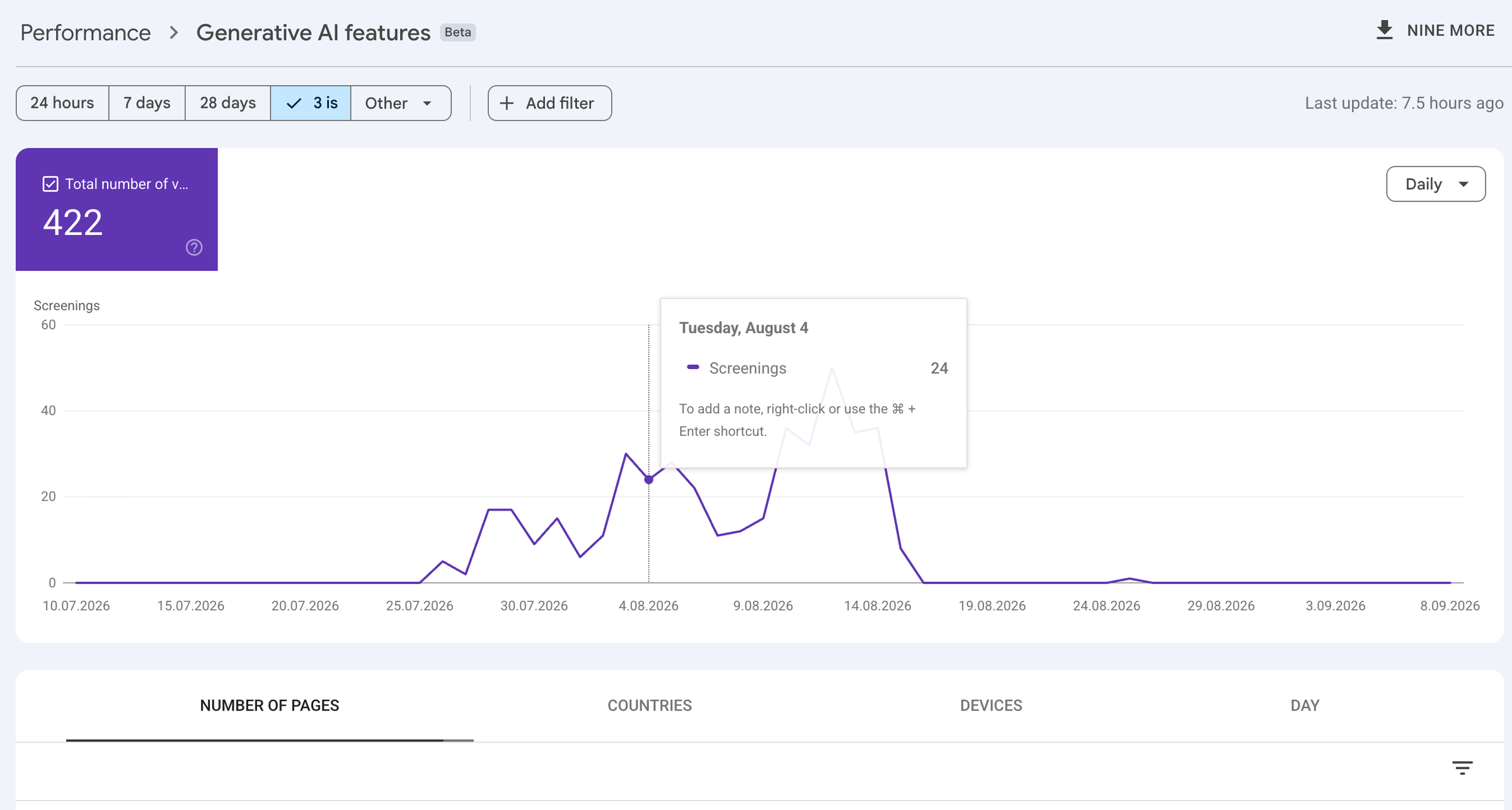
Across our search console reporting, our generative AI search impressions took a vertical nose dive. We went from 35 to 50 daily impressions in AI summaries down to 8, and then to a complete flatline of zero. The immediate assumption was obvious: Google had announced its August 2026 Spam Update, so our programmatic utility site had been hit by the rollout.
Then we looked closely at the dates.
The official spam update began on August 18 and concluded on August 21. But our impressions did not drop on August 18. They collapsed on August 15, hitting absolute zero on August 16.
An event that happened on August 18 cannot cause a collapse that took place on August 15. The timeline made the external excuse impossible.
We went back to our git deployment history to see what actually changed around August 10. Five days before the drop, on August 9, we had shipped a heavy commercial landing page and changed the primary sitewide navigation button across the entire site to point directly to an external conversion funnel. The next day, we published another batch of regional reference pages and submitted them to the search index.
Automated quality classifiers take about four to five days to crawl and process structural changes on a new domain. On August 15, the classifier finished its evaluation and flagged the site as a commercial-first destination disguised as a free utility. It stripped our AI overview eligibility instantly.
When the official spam update arrived three days later on August 18, it did not cause the drop. It merely froze the suppressed state in place, making an immediate bounce-back impossible.
Whenever search visibility drops, check your deployment log against the exact date of the telemetry cliff. If the drop started before the official update was announced, the algorithm did not randomly target you. Your own recent changes triggered the filter.