The Risk of Early Commercial Signals on a Young Domain
When launching a new programmatic utility project, the natural temptation is to monetize as soon as the pages begin indexing. If a search engine is already testing your pages in search overviews and organic snippets, why not put your primary conversion funnels in place?
On a fresh domain with no external authority, that is a dangerous mistake.
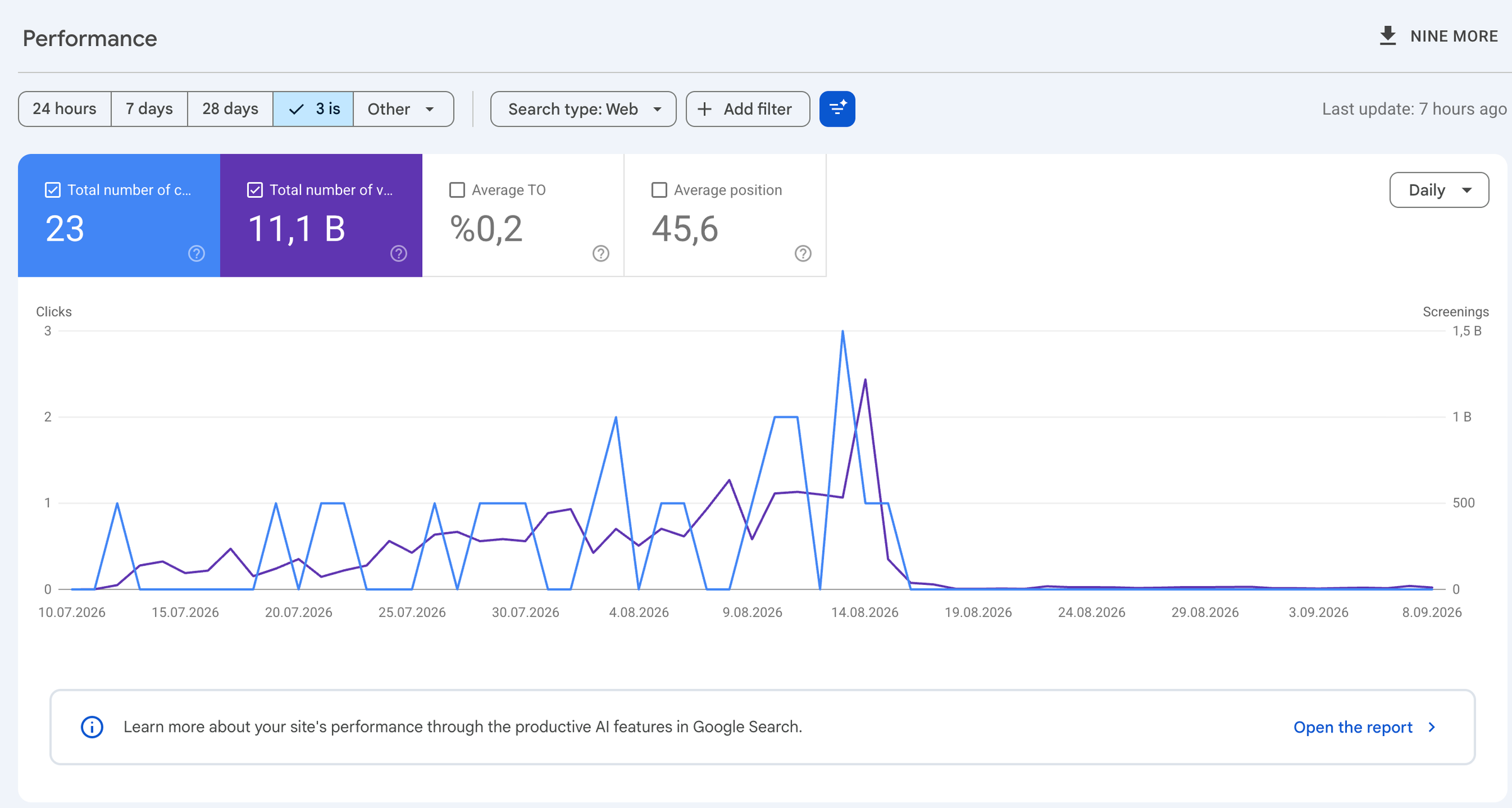
In the first thirty days of our new utility site, impressions grew quickly from zero to over a thousand a day. Seeing early traction, we published another batch of regional lookup pages, launched a comprehensive walkthrough guide, and connected the primary header button across every single page directly to a commercial partner offer.
Within four days, our daily impressions fell off a cliff.
Search engines use automated quality classifiers that look closely at site structure and commercial intent. On an authoritative website that has existed for a decade, adding an affiliate link in the main navigation is routine. But on a four-week-old domain with no external links and no verified brand searches, that same link sends an entirely different signal.
The classifier sees dozens of regional pages with similar layouts all funneling visitors into a single commercial partner. Rather than recognizing a helpful free utility, the algorithm categorizes the site as a thin programmatic affiliate funnel. It immediately throttles impressions and removes the site from generative answers.
When this happens, many builders assume the domain is burned and move on to a new project. That is the wrong reaction. There is no manual penalty or index removal; it is simply an automated quality suppression.
To recover, you have to reverse the commercial signals. Remove sitewide commercial calls to action from the top navigation. Put the functional lookup tool at the very top of the page so the user immediately gets the utility they searched for. And instead of generic template text, ground each page with verified primary data, specific regulatory guidelines, and unique reference material.
Give the utility time to prove itself as a utility before demanding it act as an affiliate engine.