Measuring a Young Domain Against the Wrong Benchmark
When managing multiple projects in parallel, it is remarkably easy to misdiagnose a healthy new site as a failure simply because you compare it to the wrong benchmark.
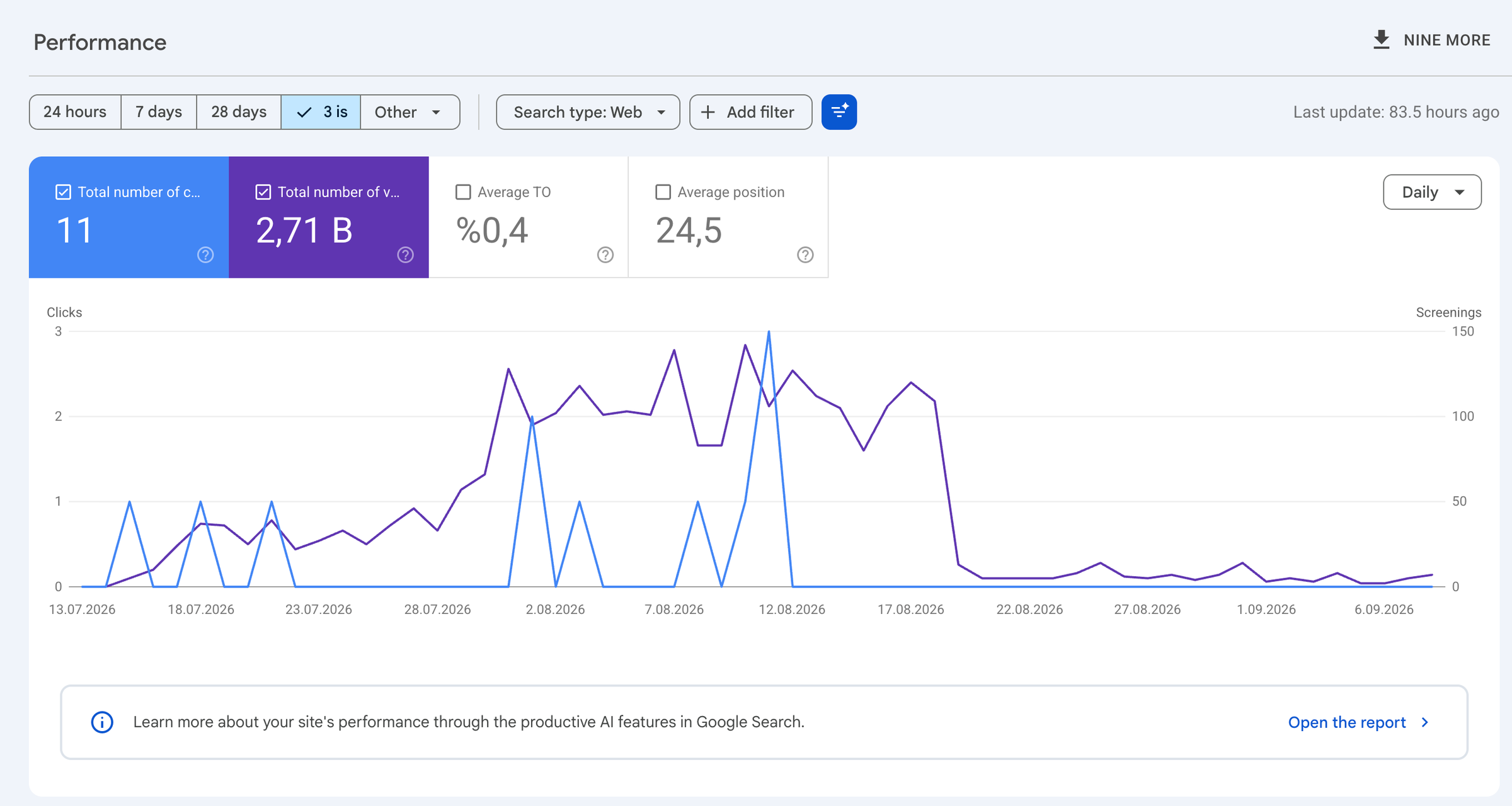
Two months ago, we launched a specialized search utility targeting a narrow, high-friction validation query. Looking at the initial numbers this week, the contrast with our older flagship project felt disappointing. The flagship generates tens of thousands of search impressions and steady daily clicks, while the new site was logging only a couple thousand monthly impressions and sporadic traffic.
The initial feeling was that the new site had failed to gain traction.
When we stopped looking at raw totals and analyzed the underlying dynamics, that diagnosis completely fell apart:
First, total addressable search volume dictates the ceiling. Our primary project targets a broad informational category, a massive pool with over one hundred thousand monthly searches across the market. The new project targets a narrow pre-transaction verification check, which accounts for only two to three thousand monthly searches in the same segments. Comparing raw counts between two completely different intent pools is not benchmarking; it is arithmetic blindness.
Second, a young domain cannot be read like an established one. In the first sixty to ninety days, search engines test pages in different positions, measuring user engagement and verifying that the domain is not abandoned. An average position of 24 on a fresh domain is not a low ceiling. It is a normal starting baseline.
Third, alternative search engines provide an essential quality sanity check. While primary search algorithms subject new domains to extended machine-learning observation periods, secondary engines often rank content based on pure on-page relevance. When we queried the webmaster API for secondary engines, our new site was already ranking on page one, between positions three and seven, for major regional queries.
If an alternative search engine immediately places your pages on the first page, your site is not broken and your content is not low quality. The product is working as intended.
Before concluding that a young project is not working, write down its age and check the actual size of the keyword pool. Most early failures are just impatience disguised as analytics.