Serving the answer, not just the tool
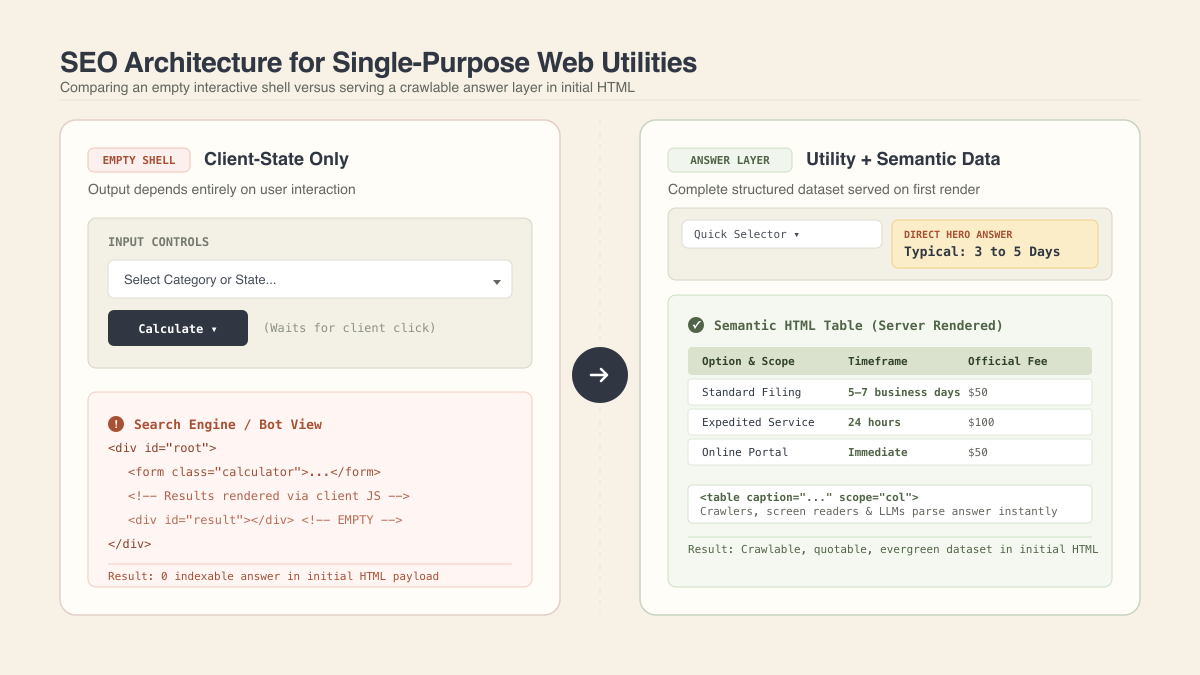
When building a web utility, the biggest SEO mistake is serving search engines an empty tool shell.
If the output only appears after a visitor clicks a dropdown or drags a slider, the tool might help a human, but search engines see an empty form. The common agency reaction is generating dozens of programmatic landing pages to compensate. A simpler approach is keeping the single page and presenting the underlying structured data directly beneath the tool in semantic HTML. The page stays an interactive utility while serving as a primary answer source.
Relevance is not about keyword repetition or exact-match headings. It works as a direct sequence: clear question, immediate answer, verifiable detail. You do not need a bloated blog post wrapped around a calculator. A one-sentence hero answer, a brief note explaining what the number covers, and a clean comparison table satisfy search intent faster than competitor filler.
Data tables should be semantic structures rather than visual grids. Using descriptive captions, header scopes, distinct row groups, and functional anchor links helps both screen readers and search crawlers parse the dataset. When dynamic data is injected on the server during the initial render, the page stays fresh without triggering continuous rebuilds.
Volatile figures should never be baked into static graphics. Putting dates or current counts inside an image turns the asset obsolete within days and contradicts the live page. Live numbers belong in the HTML markup. If a data snapshot is missing, a plain “data unavailable” notice builds more trust than stale defaults.
For AI search overviews and model citations, you do not need dedicated markup tricks. Models cite concise, unambiguous statements with clear boundaries. Being explicit about what the data measures and what it excludes makes it safe to quote.
On the product side, utility is about reducing friction rather than adding features. One-click copy, clean print layouts, and objective side-by-side differences between options deliver real value. You rarely need accounts, saved histories, or heavy libraries. The ideal flow remains simple: pick an option, read the answer, compare differences, and copy the result.